
While Ola will be restarting services in over 60 cities across the country from Tuesday, Uber, on the other hand, will restart services in 13 more cities from Tuesday, increasing coverage to over 35 cities.

'We don't know how complicated things will get with the onset of the monsoon.'

Private equity players said their research had shown that the PE share after COVID-19 could go up to 8-10 per cent.

Most feel as the movement of people normalises, the in-patient volumes in hospitals will grow and by the end of May, occupancy should be around 50 per cent, and 75 per cent over a period of time.

There has been an exponential increase in the use of technology to validate financial numbers, with a greater reliance on electronic evidence, use of live videos where possible, data analytics, and project management software to overcome the physical limitations in verifying transactions and accounts.

A letter sent out by Delhi government asked all medical directors to provide a written explanation on how the health workers contracted the disease despite wearing protective gear, maintaining safe distancing and taking all precautions.

These are becoming one of the most in-demand commodities in the COVID world with malls, offices, banks, and shops lining up to install the structure at their entrances. The company swamped with these orders is a relatively new one, Chennai-based Nanolife, which has patented its Rajat Bhasma formula or the silver nanoparticles solution as a healthy disinfectant. Sceptics, however, say if a person is potentially exposed to the COVID-19 virus, spraying the external part of the body would not kill the microbe, which is inside the body.
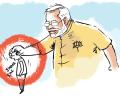
Govt has decided to suspend Sections 7, 9, and 10, which are used to trigger insolvency proceedings for six months or a period not exceeding one year from the date they commence.

'Call it by whichever name, but there is transmission happening between people.'
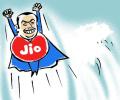
FB deal puts RIL on course to be debt-free next year; Reliance Retail biggest gainer from WhatsApp, JioMart arrangement.

Inside the narrow alleys of the basti, two CRPF companies -- around 150 armed guards -- have been deployed to keep a check on any unnecessary movement, reports Ruchika Chitravanshi.

Such a disruption will take the clock back by many years - in terms of passengers handled - for these airports, thus raising questions among some of the airport operators over a delay in expansion plans.

The sobering news is that retailers - including big firms like Reliance Retail - and exhibitors are contemplating issuing force majeure notices to shopping malls and real estate owners, and are in discussions with them to formulate an action plan for sharing the financial burden of the lockdown.

410 civil servants in a feedback survey to the Prime Minister's Office said that the curfew should stay till the pandemic is controlled and asked to increase fiscal spending on health infrastructure to around Rs 5-10 trillion.

'In the first phase, you might allow 30 per cent of the workforce to come in and see how it goes,' says industrialist Harsh Goenka.

Despite the failure of most e-commerce players to meet orders through the first week of the lockdown, there has been no serious crisis, thanks to supplies from 11 million small kirana and mom-and-pop stores across the country with the support of over 300,000 distributors and wholesalers.

'When 99.9 per cent of the most vulnerable are above 65, I see no logic in this sweeping lockdown in a country in which 94 per cent are below 65.' 'The most sensible thing to do would be to recalibrate this unnecessary lockdown as soon as possible.'

The government is drawing up a relief package for industry with steps such as relaxation of asset-classification norms by banks, thus allowing companies to delay the repayment of loans, and tax holidays for the worst-hit sectors like aviation and hospitality. But it might not be enough to stop more bankruptcies from getting filed.

DOIT is a 100 per cent subsidiary of Morgan Credits in which Rana Kapoor's daughters Radha, Roshini and Raakhe, are directors. In 2018-19, the company incurred a net loss of Rs 48.76 crore on revenues of Rs 59 crore - a sharp contrast to 2017-18 when it had profits of Rs 2.7 crore on revenues of Rs 43 crore. To fund these aggressive investments into its subsidiaries in 2018-19, DOIT used debt which doubled to Rs 600 crore in 2018-19 from the previous year.

Feedback from telecom members indicated a 10 per cent increase in traffic, but no fears of choked networks. Telcos currently use 65-70 per cent of the network capacity. In other words, they have enough additional capacity to handle the new pressure without clogging the system.
 © 2026 Rediff.com - Advertise with us - Disclaimer - Privacy Policy - Sitemap - Feedback - About us - Terms of use - Grievances